9 Quick Concrete Planters: You Can Make In An Hour
Last Updated on October 28, 2026
In a hurry? Here are 9 DIY quick concrete planters that you can make in just an hour.
This is no joke, these quick concrete planters really can be made in one hour.
You may still need to wait a day for the concrete to cure. But most of these tutorials use the rapid setting and rapid curing cement mix, so the cure time is only one hour.
You’ll have a ready-made planter in two hours!
Why are these planters so quick to make? Because they don’t require too much fussing to make the molds.

Concrete planters can be made very quickly, it’s usually the mold that inhibits the ability to get these DIY planters made in under an hour.
Click here to be taken to the bottom of the list for tips on how to make quick concrete planters.
Some of the links on this page have been provided as a convenience for finding materials. These links may also be affiliate links. As an Amazon Associate I earn from qualifying purchases, at no extra cost to you.
I only recommend products I’ve used and loved, unless otherwise stated. Click here to read my full disclosure policy.
Some Home Depot links point to comparable alternatives that have not been tested in the original tutorial. Please check the product specifications against the materials, measurements and instructions before purchasing.
Common Materials For Making Quick DIY Concrete Planters
Please see the individual tutorials for the complete list.
- Rapid set cement
- Disposable bowl
- Disposable cup
- Durable nitrile gloves– I like these because they are so durable, they can be reused
- Safety glasses
- Safety mask– rated for silica dust
Here is a list of all the essential supplies for making concrete crafts. This article details what’s important vs. what’s nice to have.
9 DIY Quick Concrete Planter Tutorials
9 Quick concrete planters that you can make in just 1 hour. If you are looking for a short project, then just take your pick from any of these handmade planter tutorials. You'll have your own DIY concrete planter in no time!

How To Make A Colored Cement Planter in Pink!
This concrete planter tutorial uses powdered pigment made specifically for concrete to get the sweet pink color. So simple, and the mold was a $1 bowl from Dollar Tree.
There are lots of types of concrete pigments you can use to color a cement planter. You can read about the types of concrete pigments and how to use them, in this article.

Green Marbled DIY Concrete Planter
Create a marbling technique using acrylic paints to make your own marbled DIY concrete succulent planter.

DIY Magnetic Cement Planters
Add magnets to a mini sized cement planter so you can hang them on a refrigerator. These quick-to-make planters are perfect for decorating a dorm. Everyone will want one!

DIY Cement Stone Shaped Planter
Use a nylon stocking to quickly form the shape of this unique DIY planter.
Marble the cement with white and black pigments, or just make it a solid color. These make adorable little concrete gifts.

Concrete Wine Cork Planters
If you love those little real wine cork planters, then you’ll love these planters made out of concrete.
My succulent stems lived for years in these- definitely longer than the ones in real cork.

Cement Balloon Planters
These cool round ball shaped cement planters really can be made in just an hour. You have to wait about 30 minutes in between molding since you mold one half at a time.
However, the total working time is still one hour.
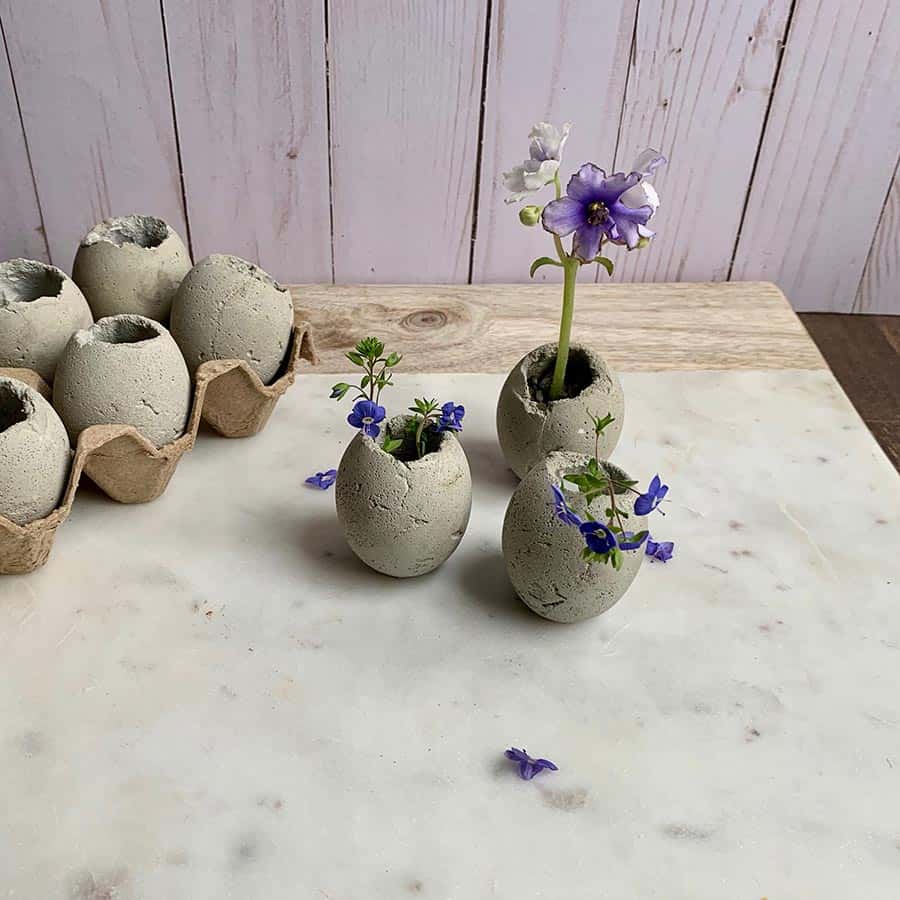
Cement Egg Planters For Easter
You might be pushing an hour for making these cement Easter egg planters depending on how many egg planters you plant to make.
You should be able to make about six cement planters in one hour. The trick is getting the hang of pushing the inner skin out through the eggshell.
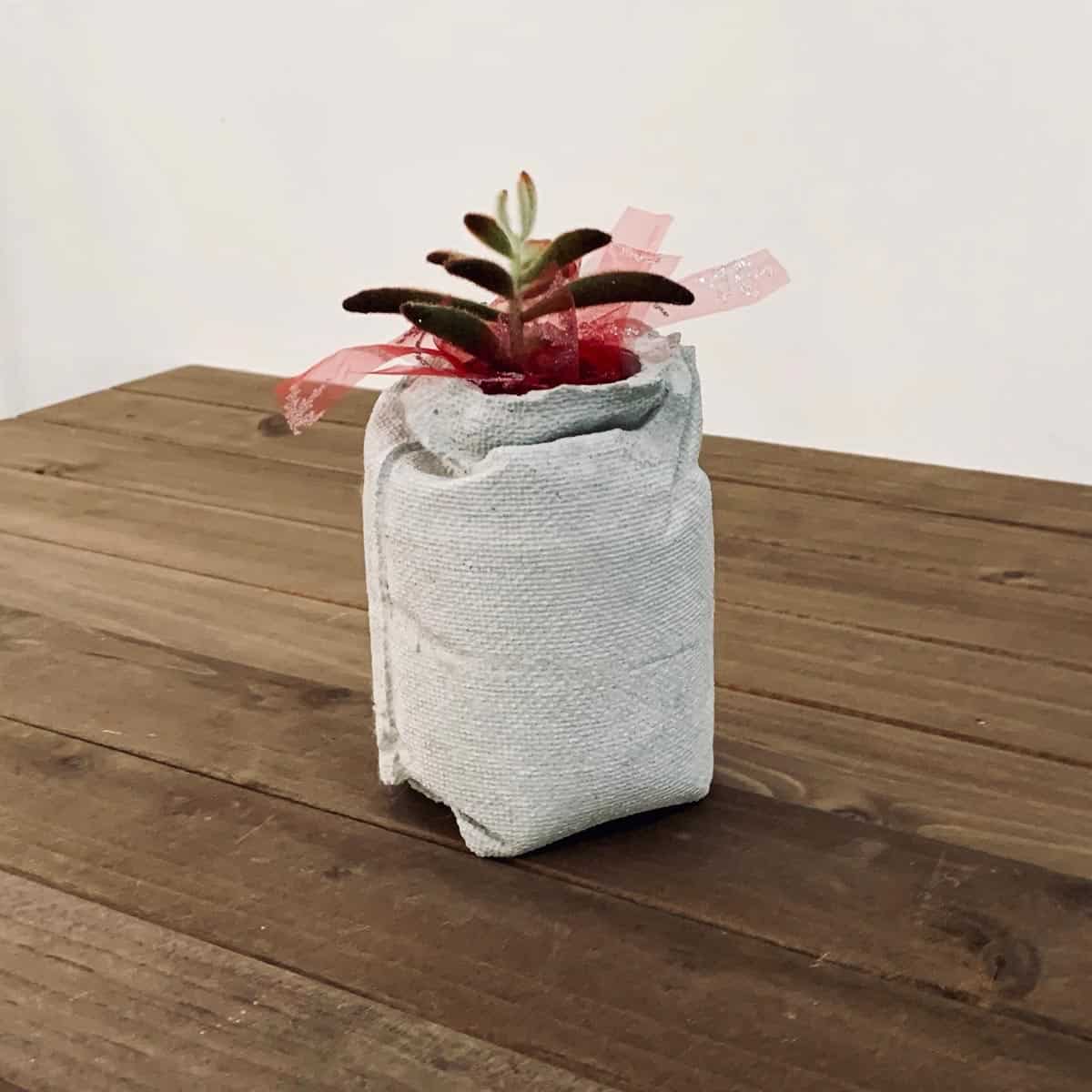
DIY Burlap Bag Concrete Planter
This concrete burlap bag planter can be made in about 20 minutes, but the demolding may take you just as long.
This planter is similar to the stone planter where you use a no-fuss mold, which is a burlap bag instead of nylon stockings.

How To Make A Cement Planter With A Succulent Design -In Relief
And this quick DIY cement planter is easy to make.
Just adhere the silicone design to the inside of the ice cream container, then glue a straw to the bottom for drainage and cast the cement.
Tips For Making Quick Concrete Planters
How do you make a concrete planter? The general method used to make a homemade quick concrete planter is to take one part water and mix it with four parts cement.
How Do You Mix Cement And Concrete For Quick Concrete Pots?

To mix cement for pots, mix the water and cement until there are no lumps.
Depending on the mold you are using, you will want a consistency between a thick milkshake and peanut butter. If the walls of your mold are thin, then the consistency needs to be on the thinner side.
Next, you’ll pour the concrete or cement mixture into your mold and let it cure for the duration marked on the bag. This can be one hour or 24 hours, typically.
Once it has cured, remove the homemade concrete planter from the mold.
You may need a little troubleshooting when making a homemade cement planter. The most likely problem you may run into is that your concrete pots are cracking.
Why Do Planters Crack?

Concrete and cement planters crack usually because either too much water was used in the mix, or weather conditions dried it too quickly.
And that made the cement or concrete contract, causing it to crack. This cracking problem is unrelated to how long it takes to make them.
To prevent cracking in cement pots, you can lightly mist them with water and wrap them in plastic while curing.
You can read more about troubleshooting concrete cracking issues in this post.
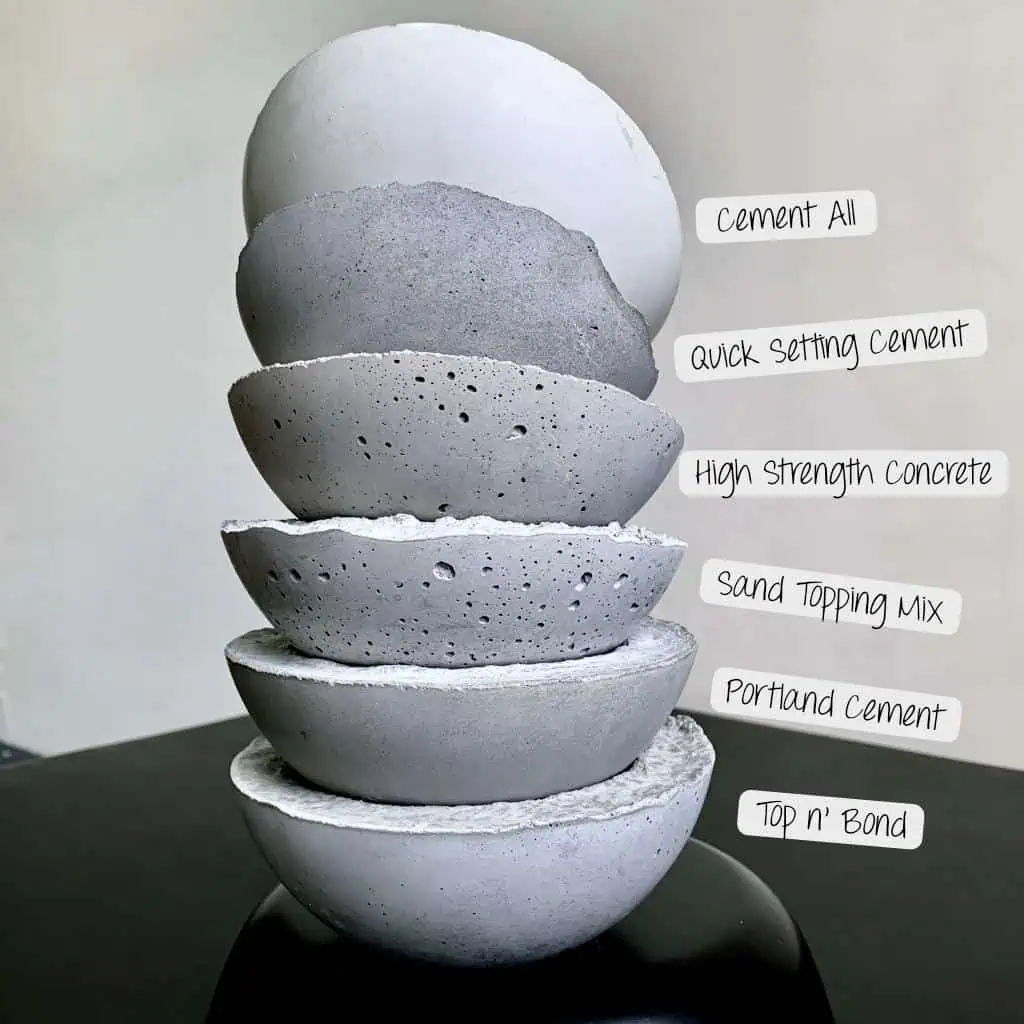
If you are wondering which cement is best for making pots, then you should understand the differences between the concrete and cement mixes.
Depending on the size of your DIY concrete planter, you may need a mix that contains more aggregate or a mix that needs to be smooth.
Here’s an article where I compared 6 different types of concrete crafts mixes.
Don’t forget to Pin it for later!

Frequently Asked Questions
What materials are commonly needed to make a quick concrete planter?
Common supplies include rapid-set cement, a disposable bowl, a disposable cup, durable nitrile gloves, safety glasses, and a safety mask rated for silica dust. The exact materials can vary by tutorial, so the individual project instructions should be checked for any additional mold or finishing supplies.
How long does it take before a quick concrete planter can be removed from its mold?
The hands-on portion can take about an hour, but the planter still needs to cure for the time specified on the cement bag before demolding. The article gives typical curing times of one hour or 24 hours, depending on the mix. Some rapid-setting and rapid-curing mixes are intended to shorten this wait.
What consistency should the cement mixture have for a planter mold?
Mix the water and cement until there are no lumps. The desired consistency can range from a thick milkshake to peanut butter, depending on the mold. If the mold walls are thin, use a mixture on the thinner side. This helps the mixture work with the shape and thickness of the chosen mold.
What water-to-cement ratio is suggested for quick concrete planters?
The general method suggests mixing one part water with four parts cement, then adjusting the consistency for the mold. Use enough mixing to eliminate lumps, while avoiding excess water. Too much water is identified as one possible cause of cracking, so the mixture should not be made unnecessarily runny.
Why might a homemade concrete planter crack while curing?
Cracking can result from using too much water or from weather conditions that dry the planter too quickly. The article explains that rapid drying can cause the cement or concrete to contract. To help prevent this issue, lightly mist the planter with water and wrap it in plastic while it cures.
How should the cement mix be chosen for a DIY planter?
The choice depends partly on the planter’s size and the finish you want. Some mixes contain more aggregate, while others produce a smoother result. A larger planter may call for a mix with more aggregate, whereas a smooth craft-style planter may require a smoother mix. Check the individual tutorial for its recommended material.